
The weeknight dinner formula that makes healthy eating actually doable
The other night, I was watching Masterchef with my twins and the contestants were asked to create a “weeknight wonder” in 36 minutes. A young male contestant was clearly concerned about his ability to complete the task, admitting that he usually takes at least an hour to cook dinner at home. My daughters agreed that they wouldn’t be able to cook dinner in such a short time.
I, on the other hand, couldn’t see what the big deal was. As a busy working mum, I’ve become pretty good at whipping up an evening meal for our family of five in half an hour or less. I’m pretty sure that many other mums reading this would be the same!
I’ve talked before about how I’m a big fan of meal planning, but I know meal plans don’t work for everyone so what I’m sharing here is a formula. A simple structure you can apply to almost any combination of ingredients you have on hand, that covers the nutritional bases without requiring a recipe, a big grocery shop or a lot of time.
Here it is:
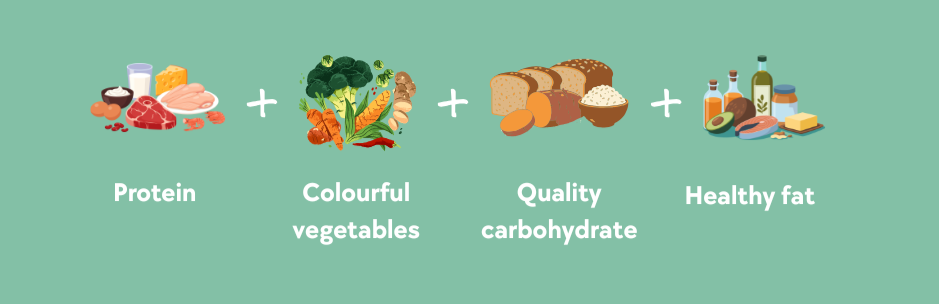
Protein + colourful vegetables + a quality carbohydrate + a healthy fat
Let’s break it down in a bit more detail…
Protein
We need protein to stabilise our blood sugar, support cell and muscle growth and repair, keep us feeling full and support healthy production of neurotransmitters like serotonin and dopamine. It also plays a key role in hormone production, immune function and making the digestive enzymes our body relies on to break down food properly.
How much? Aim for a palm-sized serve
Sources: Chicken, turkey, fish, red meat, eggs, legumes (lentils, beans, peas), tofu, tinned tuna or salmon
Colourful vegetables
Vegetables are a source of fibre, vitamins and minerals. The fibre in vegetables supports bowel regularity, helps maintain healthy cholesterol levels and plays an important role in the body's natural detoxification processes. Eating a wide variety of different vegetables also increases the diversity of our gut microbiome.
How much? Aim to fill at least half your plate with vegetables at each meal, choosing two or more different colours where possible.
Sources: Leafy greens like spinach and kale, cruciferous vegetables like broccoli, cauliflower and Brussels sprouts, and other colourful options like capsicum, zucchini, cucumber, tomato and beetroot. Starchy vegetables like sweet potato and pumpkin also count and are particularly good for sustained energy and feeding beneficial gut bacteria.
Quality Carbohydrates
Carbs often get a bad rap but there is no need to avoid them, especially if you choose healthy sources. We need carbs for sustained energy throughout the day, healthy brain function and feeding the beneficial bacteria in our gut - which is why cutting them out completely is rarely a good idea.The types of carbs I recommend minimising (or avoiding) are refined carbs, such as white bread, white pasta, pastries, biscuits, crackers and most packaged breakfast cereals, which are quickly broken down into sugar, causing rapid spikes and crashes in blood glucose levels.
How much? Aim for roughly a quarter of your plate to be a quality carbohydrate source at each meal.
Sources: Brown rice, quinoa, sweet potato, wholegrain pasta or sourdough bread
Healthy Fat
This is the component most people forget. Healthy fats play a crucial role in hormone production, brain function and the absorption of fat-soluble vitamins - and unlike the low-fat messaging we grew up with, the right kinds of fats are something we genuinely need more of, not less.
How much? When it comes to fat, small amounts go a long way, e.g. a drizzle of olive oil on salad or veggies, a small handful of nuts or ¼ - ½ avocado (depending on size)
Sources: Extra virgin olive oil, avocado and avocado oil, nuts (almonds, walnuts, cashews and macadamias), seeds (chia, flaxseed, hemp and pumpkin seeds), oily fish (salmon, sardines and mackerel), coconut oil in small amounts, and egg yolks.
Some simple combinations to get you started
To give you an idea of how the formula works in practice, here are a few simple meal combinations to get you started. I also want to point out that this way of cooking doesn't have to mean a traditional meat and three veg style dinner every night. The formula applies just as well to a pasta dish, a curry, a stir fry or a bowl meal - the components are the same, just put together differently.
Grilled chicken + steamed beans and corn + sweet potato mash + avocado slices
Air-fried salmon + brown rice + carrot, cucumber and nori sheets + avocado
Beef mince + zucchini, carrot and spinach + wholegrain pasta + olive oil and parmesan
Tinned tuna + cucumber, tomato and leafy greens + sourdough + olive oil drizzle
Turkey mince + salad veggies (grated carrot, shredded lettuce, diced tomato and capsicum) + brown rice + mashed avocado
Tofu + carrot, cabbage and capsicum + soba noodles + roasted cashews
Lamb cutlets + steamed broccoli and roasted pumpkin + quinoa + tahini dressing
Fried or poached eggs + wilted spinach and mushrooms + wholegrain toast + sliced avocado
Chickpea and vegetable curry + brown rice + natural yoghurt and a sprinkle of pumpkin or hemp seeds
Fish tacos + shredded cabbage and tomato salsa + wholegrain tortillas + avocado
Note: For simplicity, I have only listed the main components of each meal, not the sauces and additional ingredients.
The goal isn’t perfection, it’s consistency. Once you have this formula in your head, getting a nourishing dinner on the table becomes a lot less complicated - even on the busiest of nights.