
How I choose which foods to buy organic
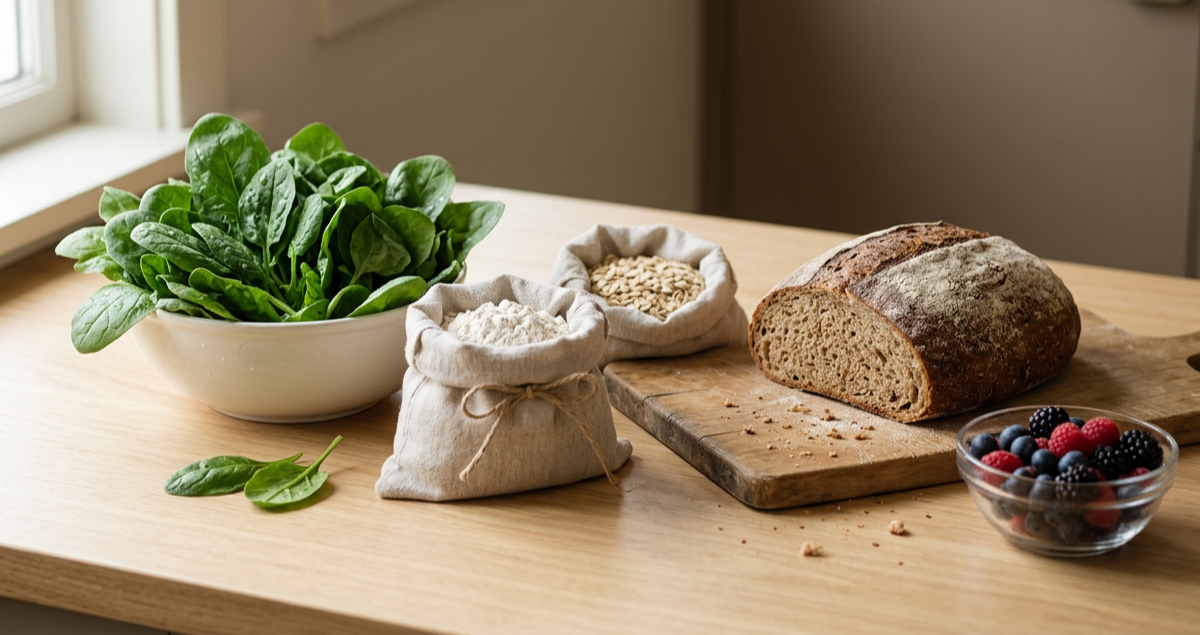
I recently shared a peek inside our pantry on Instagram and Facebook, and I thought I'd explain why many of our staples are organic, along with how I make it work for our family budget.
My reasons for choosing organic
Through DNA testing, I’ve found that I have a few gene variations that affect my detoxification pathways, and this means my body may not clear certain chemicals as efficiently as it could. Reducing my exposure to these chemicals is something I prioritise, and this is the biggest reason I choose organic where possible (and within budget).
Research suggests that eating organic can make a real difference, as one study found that when families switched to an organic diet, the levels of pesticides measured in their urine dropped significantly within just a week. The nutritional differences between organic and conventional food are less clear-cut, so for me the main benefit is really about what's not in the food rather than what is.
Another reason I choose organic, particularly for grain products like flour, bread and pasta, is because of glyphosate, a widely used herbicide. In Australia, glyphosate is registered for use on some crops, including wheat, shortly before harvest to control weeds and help dry out the crop. Not all farmers use it this way, but it's something I'm conscious of, as spraying close to harvest is more likely to leave residues in the grain. Interestingly, pre-harvest spraying of glyphosate has been banned across the European Union since 2023. Australia's regulator, the APVMA, considers glyphosate safe when used as directed, although the World Health Organization's cancer research agency has classified it as "probably carcinogenic".
I've also noticed that I tolerate bread and pasta much better when I'm in Europe. I can't say for sure why, as there are several possible factors, including traditional bread-making methods and different wheat varieties, but it's definitely made me more curious about how our food is grown and processed.
Keeping it real
While many of our pantry staples are organic, grocery shopping is expensive at the moment, so we don't buy everything organic. For fruit and vegetables, I use the Dirty Dozen and Clean 15 lists as a guide to decide where organic is most worthwhile. For example, I buy frozen organic berries and organic baby spinach, but I'm happy to buy conventional avocados and bananas. These lists are based on US testing, so I use them as a general guide rather than a strict rule. Our budget doesn't stretch to organic meat or eggs either, so I choose free-range and grass-fed options instead. I also shop at our local farmers’ market, where I find organic produce is often more affordable, and I stock up on organic pantry staples when they’re on special.
If you'd like to make a few changes, I suggest starting with the foods you eat most often, as that's where you'll make the biggest difference. It's also worth looking for a certification logo, as the word "organic" on its own isn't strictly regulated for products sold within Australia.
Most importantly, please don't let the cost of organic food stop you from eating plenty of fruit and vegetables. The benefits of eating a variety of fresh produce far outweigh any concerns about pesticide residues, so do what works for your family and your budget, and know that it's enough.
References
Australian Pesticides and Veterinary Medicines Authority. (2016). Final regulatory position: Consideration of the evidence for a formal reconsideration of glyphosate. APVMA.
Baranski, M., Srednicka-Tober, D., Volakakis, N., Seal, C., Sanderson, R., Stewart, G. B., Benbrook, C., Biavati, B., Markellou, E. Giotis, C., Gromadzka-Ostrowska, J., Rembialkowska, E., Skwarlo-Sonta, K., Tahvonen, R., Janovska, D. Niggli, U., Nicot, P. & Leifert, C. (2014). Higher antioxidant and lower cadmium concentrations and lower incidence of pesticide residues in organically grown crops: A systematic literature review and meta-analyses. British Journal of Nutrition, 112(5), 794-811.
European Commission. (2023). Commission Implementing Regulation (EU) 2023/2660 renewing the approval of the active substance glyphosate. Official Journal of the European Union.
Hyland, C., Bradman, A., Gerona, R., Patton, S., Zakharevich, I., Gunier, R. B., & Klein, K. (2019). Organic diet intervention significantly reduces urinary pesticide levels in U.S. children and adults. Environmental Research, 171, 568-575.
International Agency for Research on Cancer. (2015). Some organophosphate insecticides and herbicides (IARC Monographs on the Evaluation of Carcinogenic Risks to Humans, Vol. 112). World Health Organization.
Smith-Spangler, C., Brandeau, M. L., Hunter, G. E., Bavinger, J. C., Pearson, M., Eschbach, P. J., ... & Bravata, D. M. (2012). Are organic foods safer or healthier than conventional alternatives? A systematic review. Annals of Internal Medicine, 157(5), 348-366.