
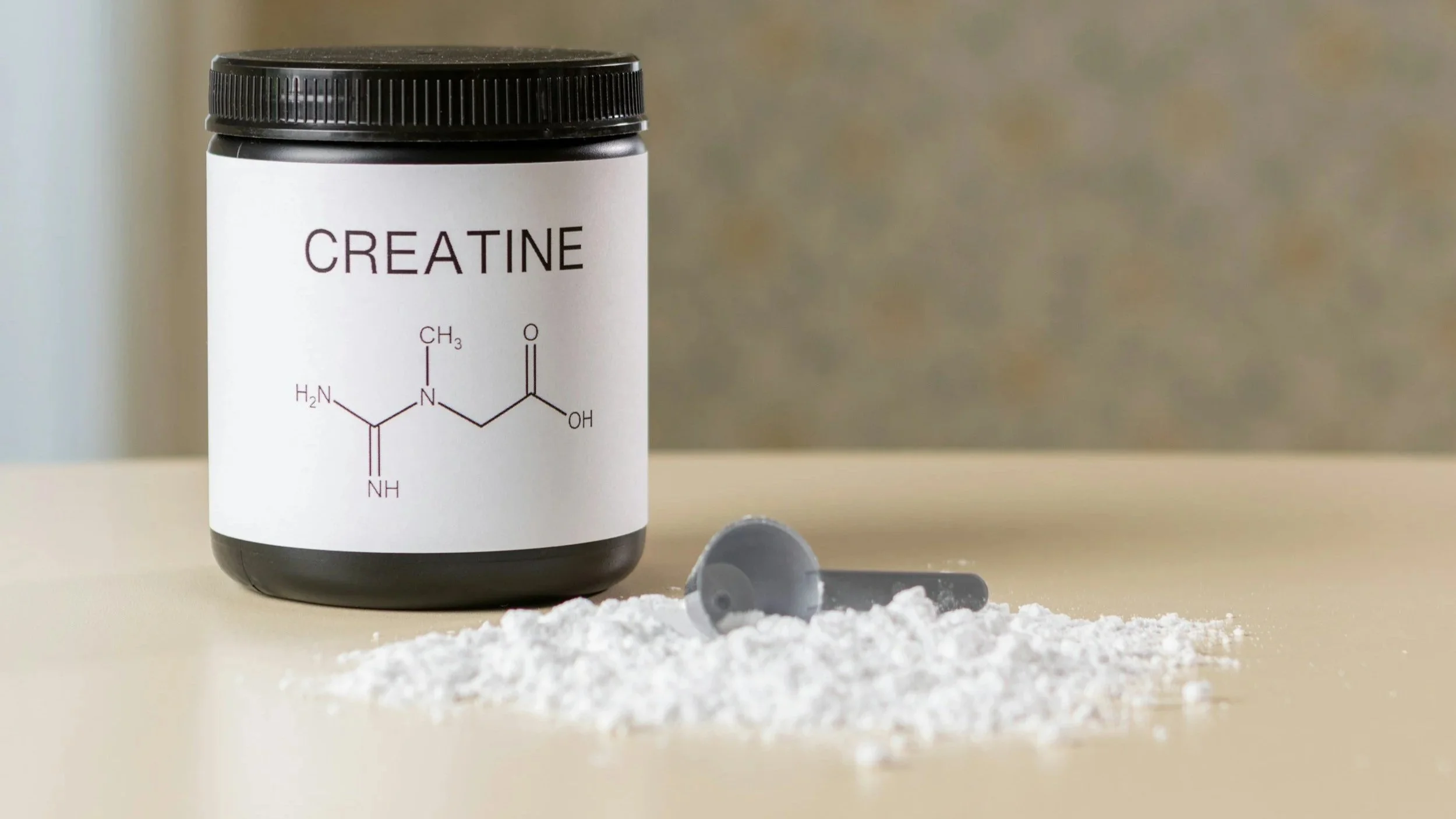
Creatine isn't just for gym junkies anymore. Growing research shows that creatine doesn't just support muscle maintenance, it also has benefits for cognitive function and mood. This is especially relevant if you're a woman in midlife, when both muscle mass and mental clarity can decline as oestrogen drops.
So, does it actually live up to the hype, and who really needs it?
Creatine is a compound your body makes in small amounts, mostly in the liver and kidneys, using amino acids from the protein you eat. It is also found naturally in foods like red meat and fish. Most of the creatine in your body ends up stored in your muscles as phosphocreatine, where it plays a very specific role in how energy (ATP) gets produced. When you're doing something intense, like a heavy lift or sprint, it acts like an energy reserve your muscles can call on for a quick burst of power.
Decades of research have confirmed creatine’s role in improving strength, muscle size and high-intensity exercise performance. This is why it is so popular among athletes and the gym crowd.
More recently, emerging evidence has shown that creatine benefits other aspects of our physical and mental health, including cognitive function, mood and muscle maintenance. Studies have also shown moderate improvements in memory, and there's promising work on creatine helping with fatigue in specific contexts like long COVID and sleep deprivation.
Who benefits from taking supplemental creatine?
Vegetarians and vegans - Dietary creatine mainly comes from meat and fish, so baseline creatine levels tend to be lower
Women in midlife - Declining oestrogen can affect muscle mass, cognitive function, memory and mood
Older adults - Sarcopenia (age-related loss of muscle) increases with age, especially when paired with reduced activity
Anyone doing regular strength training - Short bursts of intense effort rely on rapid energy regeneration.
You may have heard that creatine is bad for your kidneys, so I wanted to address that directly. The research is reassuring, with numerous studies confirming that creatine does not harm kidney function in people who are otherwise healthy, despite this being one of the most persistent myths surrounding it. If you have a pre-existing kidney condition, however, I recommend checking with your doctor before starting, as creatine isn't suitable for everyone.
A safe creatine dose for a healthy adult is 5g a day, and creatine monohydrate is the most well-researched form. It is flavourless and can be mixed with water or juice, but it’s worth noting that it doesn’t dissolve perfectly so it can leave a slightly grainy texture if you don’t mix it in thoroughly.
I don’t like to follow fads and social media trends but I have to admit, I am a recent convert to creatine and I now take it every day. It is hard to refute the evidence of its benefits, and for me, the answer to that opening question is yes, it genuinely lives up to the hype.
References
Kreider, R. B., Kalman, D. S., Antonio, J., Ziegenfuss, T. N., Wildman, R., Collins, R., Candow, D. G., Kleiner, S. M., Almada, A. L., & Lopez, H. L. (2017). International Society of Sports Nutrition position stand: safety and efficacy of creatine supplementation in exercise, sport, and medicine. Journal of the International Society of Sports Nutrition, 14, 18. https://doi.org/10.1186/s12970-017-0173-z
Naeini, E. K., Eskandari, M., Mortazavi, M., Gholaminejad, A., & Karevan, N. (2025). Effect of creatine supplementation on kidney function: a systematic review and meta-analysis. BMC nephrology, 26(1), 622. https://doi.org/10.1186/s12882-025-04558-6
Xu, C., Bi, S., Zhang, W., & Luo, L. (2024). The effects of creatine supplementation on cognitive function in adults: a systematic review and meta-analysis. Frontiers in nutrition, 11, 1424972. https://doi.org/10.3389/fnut.2024.1424972