
After-school snacks that keep kids going until dinner
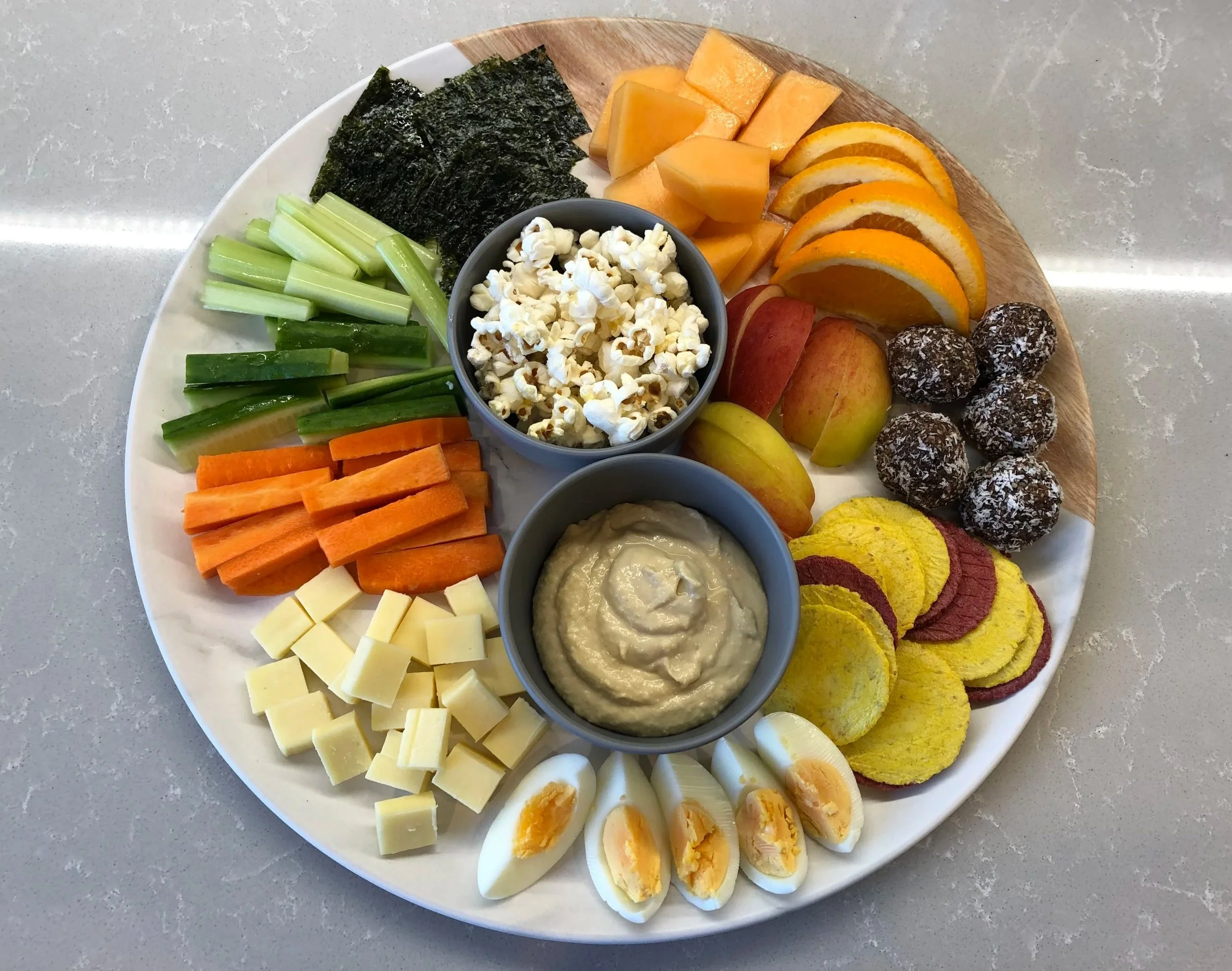
Shared after-school snack plate for 3 to 4 children (depending on age and appetite!)
Many parents notice the same pattern in the afternoons. Kids come home from school starving, eat a snack, and then seem hungry again not long after. This often leads to constant grazing, crankiness before dinner, or pressure to keep offering more food.
In most cases, this isn’t about kids being greedy or fussy. It’s about how after-school snacks are put together, and what kids actually need at that time of day.
After school is often the point when everything catches up. Kids have usually:
• gone several hours since lunch
• used a lot of mental and physical energy
• held themselves together socially and emotionally
• had limited opportunity to eat enough during the day
By the time they get home, their energy reserves are low. Hunger at this time is very real and very normal. The issue usually isn’t the amount of food. It’s that the snack doesn’t always support kids well enough to get through to dinner.
Many typical after-school snacks are carbohydrate-heavy, for example, crackers, fruit, rice cakes, muesli bars or toast on their own. These foods digest quickly and can give a short burst of energy, but they don’t tend to keep kids satisfied for very long. Blood sugar rises, then drops again, and hunger returns soon after. This is often when parents feel like kids are “never satisfied”, when in reality their bodies are just asking for something more balanced.
After school is a time when kids benefit from snacks that are a bit more substantial. Including a source of protein and some fat alongside healthy carbohydrates helps slow digestion and supports steadier energy. Fibre also plays a role in helping kids feel full for longer.
This doesn’t mean snacks need to be complicated. Small tweaks to your child’s usual snacks can make a big difference.
For example:
• fruit with yogurt instead of fruit alone
• crackers with cheese or hummus
• toast with peanut butter rather than plain toast
• a smoothie with milk or yogurt added, not just fruit
These combinations are often enough to help kids feel settled until dinner without constant requests for more food.
Sometimes portions need adjusting, especially during growth spurts. Sometimes kids are also tired, bored or needing connection after a long day. But if hunger keeps returning quickly most days, it’s usually a sign the snack needs a bit more substance.
As always, it’s about finding combinations that work most of the time and feel manageable for your family. Snacks should be easy to prepare, use familiar foods and reduce stress rather than add to it. A helpful strategy for busy weekdays is doing a bit of prep on the weekend. This might look like baking some muffins, boiling a few eggs, making bliss balls or chopping veggie sticks so they’re ready to go.
As an added bonus, more substantial after-school snacks often make the rest of the afternoon calmer and take some pressure off at dinnertime too.
More afternoon tea ideas
Fruit + protein/fat
• Apple or pear with cheese
• Banana with peanut butter
• Berries with yogurt
• Fruit with a handful of nuts (age-appropriate)
Crackers or toast-style snacks
• Crackers with cheese
• Crackers with hummus
• Toast with peanut butter
• Toast with avocado and feta
Dairy-based options
• Yogurt with fruit or seeds
• Cream cheese with crackers
• Milk with a muffin or slice of toast
• Smoothie with milk or yogurt added (not just fruit)
Savoury options
• Hard-boiled egg
• Leftover meatballs or sausage
• Mini wrap with cheese and protein
• Corn thins with cream cheese or hummus
For more after-school snack inspiration, check out these blog posts:
If school lunchboxes feel harder than they should, my 4-step lunchbox guide walks you through a simple, repeatable system you can use straight away. You can get it here.